Long story short
Making a hybrid car more efficient often isn’t about new hardware, but about how cleverly the software coordinates the engine and the battery. Every small optimization in that software yields fuel savings, but with dozens of tunable parameters affecting each other in non-obvious ways, manually searching for the best setting is almost an impossible task. For a car manufacturer, every drop counts: a small gain per car becomes a large saving at scale. A major car manufacturer ran into exactly that problem.


What does this mean for you?
Is the gain in your own product also hidden in software settings you’d rather not keep tuning by hand? CTRL engineering builds detailed simulation models and lets an optimization platform test thousands of combinations virtually, in a fraction of the time manual tuning would take.
The challenge
The energy management software of their hybrid powertrain needed to be optimized, but manually tuning the numerous parameters and target maps was time-consuming and, given the number of possible combinations, practically unfeasible.
Our approach
CTRL engineering built a detailed digital model of the entire hybrid powertrain and let an optimization platform automatically test thousands of setting combinations, measuring performance each time and adjusting its search strategy based on the previous results. All of this happened virtually, under realistic driving conditions, without a single test drive being needed.
“You don't need to guess when you can simulate and explore intelligently.”
The result
13% less fuel consumption (3.21 l/100 km on the NEDC cycle), and weeks of manual tuning work replaced by an automated process that reached a more reliable configuration in a fraction of the time.
AUTOMOTIVE

Off-Highway Tier 1Virtual Validation for Off-Road Transmission Systems
Read This Success StoryAUTOMOTIVE

KU Leuven LMSDPushing the Limits of Measurement Precision in Drivetrain Research
Read This Success StoryAUTOMOTIVE

Auto Tier1Test Anywhere: Simulation at the Heart of Mobile Testbench Design
Read This Success Story
AUTOMOTIVE

KU Leuven LMSD & Toyota Motor EuropeResearch institution Test bench for powertrain components
Read This Success StoryAUTOMOTIVE

TRAXIALManufacturer of electric motors Automated test bench for their motors
Read This Success StoryPRODUCTION TECHNOLOGY
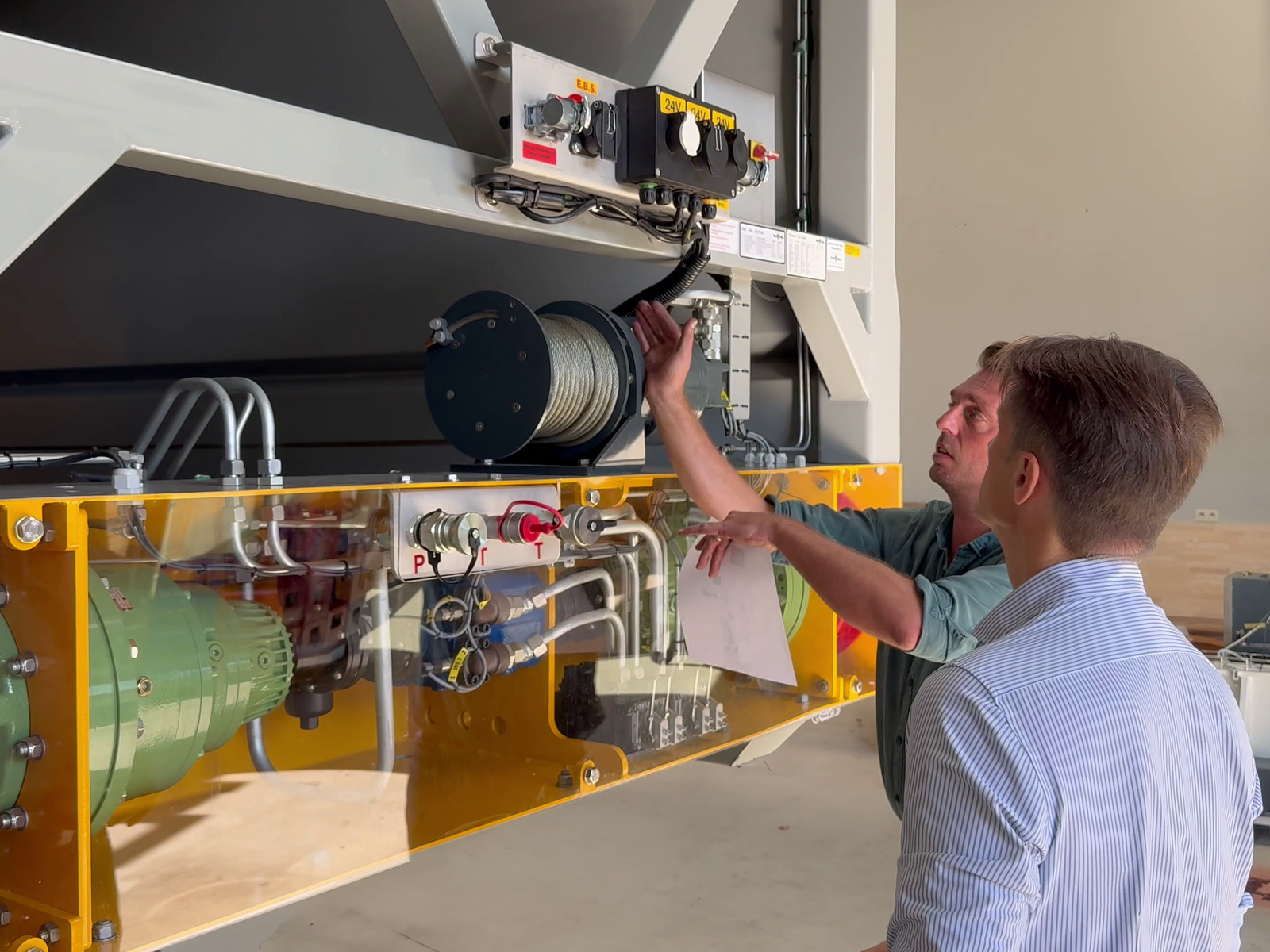
Delto PullHow do you unload a truck without ever tipping it?
Read This Success StoryPRODUCTION TECHNOLOGY

AllwavesManufacturer of wave pools A wave pool that creates ocean-quality surf waves
Read This Success Story